Strategies for managing heat stress in calves
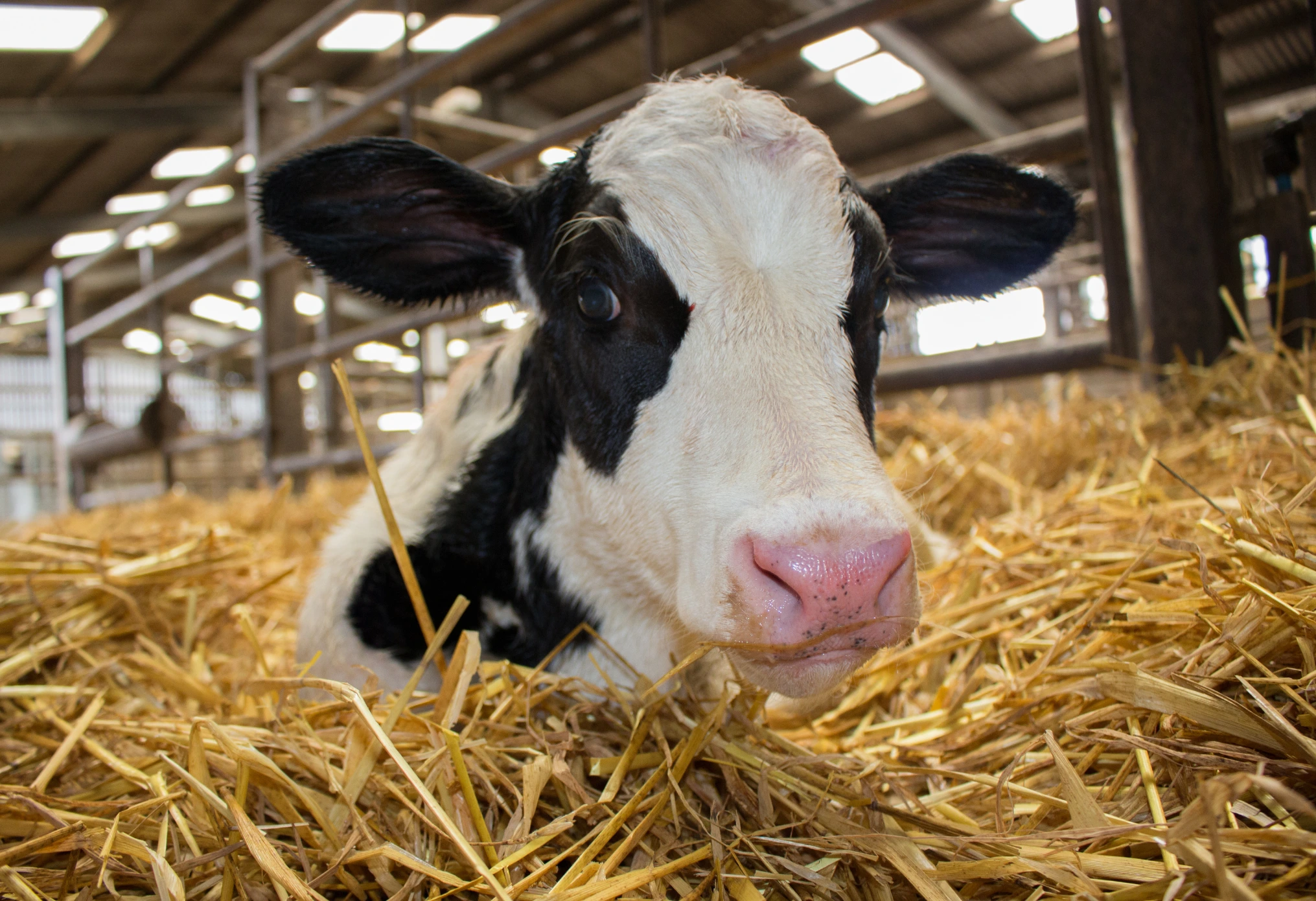
In the common perception of livestock farming, heat stress is a phenomenon that mainly affects lactating cows. However, research and field evidence show that calves are just as vulnerable to high temperatures.
Whilst cooling systems are now standard practice for adult cows, calves often spend the summer in facilities which, if not managed properly, can turn into veritable ‘heat traps’.
Managing heat stress is not just about improving animal welfare, but also about protecting the farm’s future investment: a calf that suffers severe heat stress in the early stages of life will see its growth performance and future efficiency compromised.
The physiology of stress: when the calf ‘suffers’
The calf’s welfare is closely linked to the surrounding microclimate.
Studies indicate that calves are within their thermal comfort zone when the ambient temperature is between 13°C and 25°C. Above this threshold, conditions become critical.
The universal benchmark is the THI (Temperature-Humidity Index), an index that combines air temperature and relative humidity. When the THI reaches 72, calves begin to show the first signs of ‘distress’, but unlike adults, the signs in calves may be more subtle yet equally serious. Let’s look at them below:
- Hyperventilation: an increase in respiratory rate to dissipate heat through pulmonary evaporation.
- Sweating: a process which, whilst useful for cooling the body, results in a massive loss of fluids and minerals.
- Lethargy: a reduction in movement to avoid generating further metabolic heat.
Above 25.5°C – identified as the UCT (Upper Critical Temperature) – calves are no longer able to maintain a constant body temperature without expending additional energy.
The nutritional paradox: greater nutritional needs, less appetite
One of the most insidious effects of the heat is a change in feeding behaviour. During the summer, intake of starter feed (solid) tends to fall dramatically. This creates a paradox: whilst the calf eats less, its energy expenditure on thermoregulation increases. The energy that would normally be channelled into growth and the development of the immune system is ‘burned off’ to maintain thermal homeostasis.
The crucial role of milk and water
To compensate for this energy deficit, it is essential not to restrict milk intake. Providing the right amount of milk or milk substitute is the key strategy for ensuring the calorie intake required for growth during the summer months.
At the same time, fluid management becomes the cornerstone of survival. The availability of fresh, clean water is not only a legal requirement but a biological necessity. Research shows that the amount of water consumed directly influences the development of the rumen. In summer, water intake may increase independently of starter feed consumption; therefore, water must always be available, right from the first days of life.
One detail that is often overlooked is the temperature of the water: water that is too hot is unpalatable, reducing the total intake of fluids. Furthermore, to support the animal’s physiology and prevent dehydration caused by sweating, it is strongly recommended that electrolytes be added to the water. These help to maintain cellular osmotic balance without the need for therapeutic intervention.
Housing design to create an ideal microclimate
Although individual pens or igloos are excellent for controlling neonatal diseases, they can overheat rapidly in direct sunlight. Proper management of these facilities can reduce the internal temperature by 1–2°C, a difference that can be vital for a calf.
Orientation and shading
The best structural solution involves installing the ‘hutches’ with their openings facing East. This positioning allows the less intense morning sunlight to enter, whilst protecting the inside of the cage from the scorching afternoon sun, thereby minimising direct solar heating.
Artificial shading is another powerful tool. Installing a shade net positioned 90–120 cm above the cages creates an effective barrier against UV rays, whilst promoting air circulation between the net and the structure. The strategic use of trees or existing canopies can also provide valuable natural shelter.
Ventilation and airflow dynamics
In summer, stagnant air is bad for your health. To maximise air circulation, the cages should be spaced apart: we recommend at least 1 metre of space between them and 3 metres between rows.
A simple but extremely effective technique involves raising the rear of the igloo by about 10–20 cm, for example by placing it on a couple of concrete blocks. This simple adjustment creates a ‘chimney effect’ or a cross-flow of air which:
- Increase the internal air exchange.
- It reduces the temperature felt by the calf.
- It reduces ammonia levels, improving the quality of the air we breathe and reducing the strain on the respiratory tract.
Litter hygiene and pest control
Bedding management undergoes a complete transformation between winter and summer. Whilst straw is unbeatable in the colder months due to its insulating properties (its ability to retain heat), in summer this very quality becomes a disadvantage.
During the warmer months, it is best to use materials with low insulating properties, such as sand or sawdust, which allow the calf to dissipate heat by conduction whilst lying on a cool surface. Regardless of the material chosen, the key requirement remains dryness: dry bedding drastically reduces the amount of ammonia and, above all, breaks the biological cycle of flies.
Flies are not just an annoying nuisance; their buzzing and bites significantly increase the animal’s stress levels. As flies use damp areas to lay their eggs, keeping the resting area clean and dry is the first line of biological defence on the farm.
Operational optimisation: the time factor
Finally, stress management also involves the organisation of human work. All activities involving the handling of calves or which increase their agitation — such as moving them, weighing them or vaccinating them — must strictly be scheduled for the early hours of the morning. During this time, ambient temperatures are at their lowest and the animal has had the opportunity to recover overnight, arriving at the appointment with a lower basal body temperature.
Tecnozoo’s solutions to support calves during periods of heat stress
Managing heat stress in calves requires an integrated approach, in which the environment, management and nutrition work together to help maintain the animal’s normal physiological balance.
To meet the various needs of livestock farming, Tecnozoo has developed a range of complementary feeds and supplementary products that can be incorporated into specific nutritional programmes during periods of high temperatures.
NORMOTERM FLUID is a liquid complementary feed containing natural phytochemicals, including Salix alba L. and Filipendula ulmaria Max, formulated to help maintain the animal’s physiological and oxidative balance; it is particularly suitable for periods characterised by high temperatures and reduced appetite.
To support the normal balance of the gut flora – a particularly important factor in situations of increased environmental stress – Tecnozoo offers GARDIAN ONE, a complementary feed based on prebiotics and probiotics, designed to support calves during the most delicate stages of their growth.
During the summer months, it is also essential to ensure that fluid and electrolyte balance is maintained. In this context, REIDRAL LIQUID provides valuable nutritional support thanks to its supply of mineral salts and readily available energy, making it particularly suitable during periods of high temperatures or increased fluid requirements.
For calves requiring rapid replenishment of water, minerals and energy, BIREIDRAL 1+2 is also available. This is an energy-enriched saline rehydration solution formulated to promote a balanced return to normal nutrition in fatigued or debilitated animals, and as a nutritional aid in situations characterised by digestive disorders, helping to restore the water-electrolyte balance.
For animals requiring specific nutritional support, it is also possible to include DIETOMILK, a complementary feed developed to support calves during the most critical stages of rearing, and VITAM, a vitamin solution formulated to supplement the diet during periods of increased nutritional requirements.
The choice of the most suitable nutritional programme must always be made by carefully assessing the characteristics of the farm, the age of the animals and the environmental conditions, with the support of the technical advisor and the veterinary surgeon.
Protecting calves from heat stress requires a multidisciplinary approach that combines precision nutrition, environmental engineering and good management practices, because a healthy calf today will be a healthy heifer tomorrow and a productive cow the day after tomorrow.
Would you like to find out which approach is best suited to your herd?
Request a personalized consultation.