Heat Stress in Dairy Cows: Metabolic and Productive Impacts and Management StrategiesStress da caldo nelle vacche da latte: impatti metabolici, produttivi e strategie di gestione.
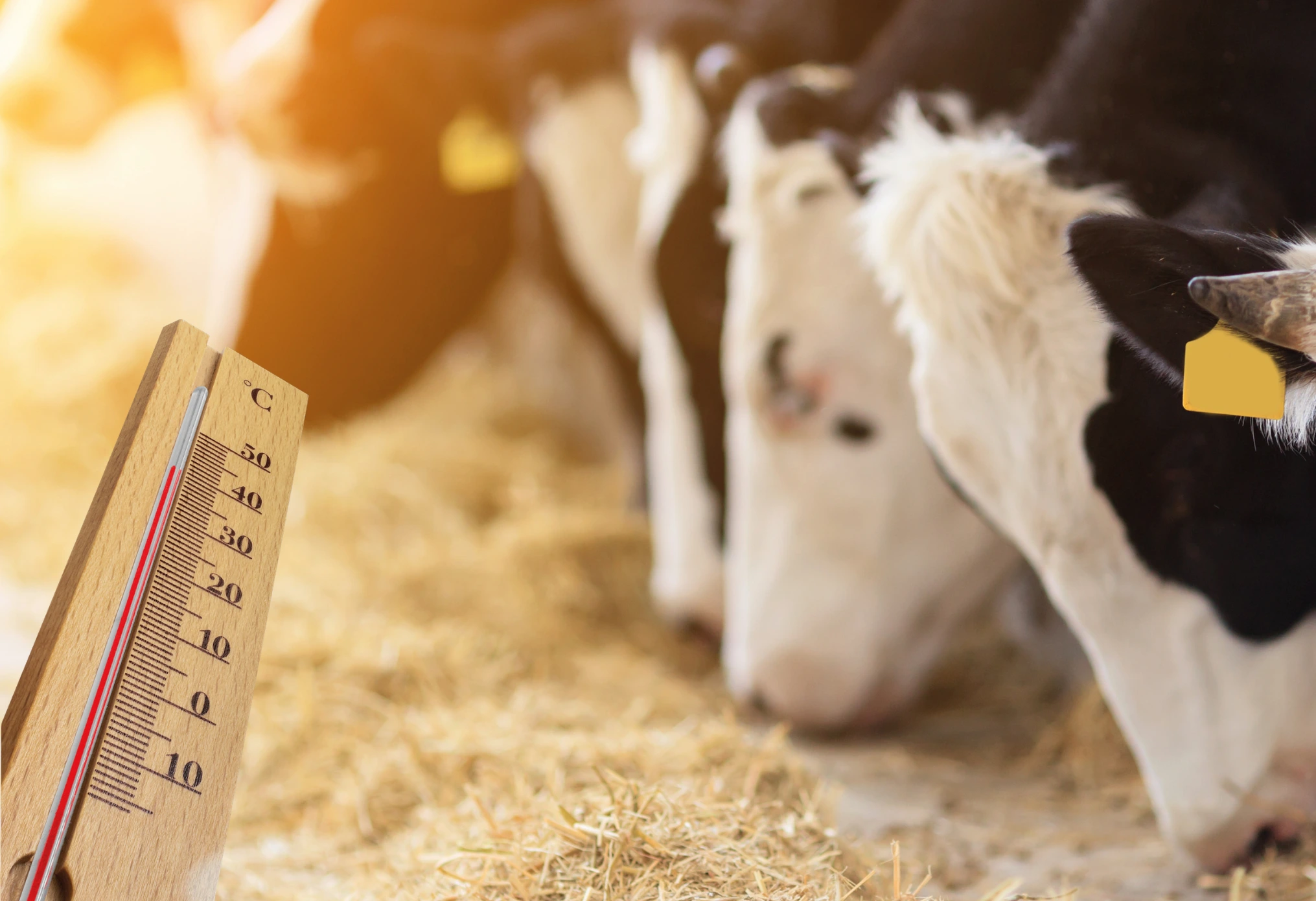
Heat stress is not simply a reduction in feed intake or a temporary decline in production.
It is a complex physiological response involving metabolism, intestinal health, the immune system, fertility and production.
Understanding the mechanisms underlying heat stress makes it possible to adopt more effective management and nutritional strategies, with the aim of supporting cow welfare and helping maintain farm productivity even during the most critical months of the year.
Heat stress can have a significant impact on your herd’s performance. Would you like to evaluate the most suitable strategies for your farm?
Request a personalized consultation from Tecnozoo technicians.
Heat Stress: One of the Main Causes of Inefficiency in Dairy Farms
Heat stress is one of the most detrimental factors affecting the profitability of dairy cattle farms. High environmental temperatures, especially when associated with high levels of relative humidity, can compromise the animal’s physiological balance, resulting in a series of metabolic adaptations that negatively affect production, fertility, health and welfare.
In recent years, these phenomena have become increasingly important in Italy, where summer heat waves are becoming more frequent and prolonged. It has therefore become essential to understand and manage heat stress not merely as a seasonal issue, but as an integral part of technical herd management strategies.
Why Are High-Producing Dairy Cows More Sensitive to Heat?
The dairy cow is an animal characterized by intense metabolic activity. During milk synthesis, a considerable amount of metabolic heat is produced and must be dissipated into the environment; therefore, as milk production increases, so does the amount of energy converted into heat.
This means that a cow producing 40–45 kg of milk per day has a lower tolerance to heat than less productive animals and can more easily enter a state of stress.
When the ability to dissipate heat becomes insufficient due to high temperatures, the body activates a series of compensatory mechanisms aimed at maintaining body temperature.
These include:
- Increased respiratory rate;
- Increased water consumption;
- Greater sweating;
- Increased peripheral blood flow;
- Reduced physical activity;
- Reduced dry matter intake.
All these adaptations result in increased maintenance energy requirements and a lower availability of nutrients for production.
The reduction in feed intake explains only part of the production losses. Although heat stress has traditionally been associated with reduced feed consumption, this is not the only factor responsible for decreased production.
It is true that cows tend to reduce their dry matter intake during the hottest periods. This occurs as a way of limiting the heat production resulting from ruminal fermentation; however, the phenomenon involves numerous physiological and metabolic adaptations that affect the cow’s productive efficiency.
Studies (Rhoads et al., 2009; Wheelock et al., 2010; Baumgard et al., 2012) indicate that lower feed intake accounts for approximately 50% of the decline in milk yield.
The remaining portion is linked to profound endocrine and metabolic changes occurring in animals subjected to heat stress.
Heat Stress and Metabolism: What Really Happens in the Cow?
During summer, when temperatures rise significantly, the dairy cow undergoes profound metabolic changes. Being in a negative energy balance, she mobilizes body reserves to support productive functions.
Despite reduced feed intake and the resulting body weight loss, other indicators of heat stress can be observed:
- Increased circulating insulin;
- Reduced mobilization of adipose tissue;
- Decreased NEFA (non-esterified fatty acids);
- modificazione della destinazione dei nutrienti.
An increasing proportion of glucose is utilized by peripheral tissues involved in thermoregulation, reducing the availability of energy for the mammary gland.
This directly contributes to lower milk production and reduced feed efficiency.
What Are the Productive and Reproductive Effects of Heat Stress?
The consequences of heat stress may appear rapidly and can also persist over time.
Among the most commonly observed effects on production are, in addition to a reduction in milk yield, the following:
- Reduced milk fat and protein percentages;
- Worsened feed efficiency;
- Loss of body condition.
Among the reproductive effects:
- Reduced reproductive efficiency;
- Lower fertility;
- Increased calving-to-conception interval;
- Increased risk of abortion.
In addition, increased oxidative stress, metabolic alterations, greater predisposition to hoof problems and increased systemic inflammatory pressure are often observed.
How to Properly Manage Heat Stress? Advice from Tecnozoo Specialists
Effective management of heat stress in dairy farming requires an integrated and comprehensive approach involving facilities, management and nutrition.
Optimize Ventilation and Cooling
Proper microclimate management is the first intervention to implement.
Forced ventilation systems, evaporative cooling and THI (Temperature Humidity Index) monitoring help reduce the thermal load on animals and improve barn comfort.
Ensure High-Quality Water
Water is the most important nutrient during the summer months.
It is essential to verify the availability, flow rate and quality of waterers to meet the increased water requirements of dairy cows.
Support Rumen Functionality
Reduced feed intake and changes in feeding behavior can increase the risk of digestive imbalances.
Therefore, maintaining rumen stability through proper ration formulation and the use of specific ingredients when necessary is important.
Support Metabolism and Intestinal Health
Modern nutritional strategies include solutions formulated to support metabolic balance and intestinal functionality during periods of increased environmental pressure.
Live yeasts, yeast metabolites, osmoregulatory substances, vitamins, organic trace elements and plant extracts can be incorporated into nutritional programs developed by veterinarians and nutritionists.
Every farm has specific needs. Would you like to learn which nutritional and management strategies are most suitable for your operation?
Contact your local Tecnozoo representative.
Which Tecnozoo Products Are Recommended for Heat Stress?
SUMMER 300 TOP PELLET: Nutritional Support During Periods of Intense Heat
Among the nutritional strategies that can be adopted during the summer months, SUMMER 300 TOP is a complementary feed formulated to help maintain the normal physiology of dairy cows during periods characterized by high environmental temperatures.
The formulation provides betaine, useful for supporting cells under osmotic stress and dehydration conditions, niacin and choline, involved in energy and lipid metabolism, as well as minerals and trace elements that help replenish losses associated with heat stress.
The presence of live yeasts, probiotics and plant extracts completes the product, helping to maintain rumen efficiency and stability.
NORMOTERM ORAC: Support for Oxidative Balance During Stress
Heat stress is frequently associated with increased oxidative stress and metabolic pressure on the body. NORMOTERM ORAC is a complementary feed formulated with products obtained from processed plants, polyphenols and phenolic compounds of plant origin.
Thanks to the presence of substances with antioxidant activity, the product is intended to help maintain the animal’s oxidative and physiological balance during periods of greater environmental stress.
AGENOR: Support for Ration Stability During Critical Periods
During the hottest months, high temperatures can affect the quality of the TMR, promoting undesirable fermentations and faster nutrient degradation. AGENOR is a complementary feed formulated with selected plant-derived products to help maintain the thermal and oxidative balance of both the animal and the ration.
During the hottest months, high temperatures can affect the quality of the TMR, promoting undesirable fermentations and faster nutrient degradation. AGENOR is a complementary feed formulated with selected plant-derived products to help maintain the thermal and oxidative balance of both the animal and the ration.
Thanks to its formulation, AGENOR helps limit abnormal fermentations within the TMR, promoting better preservation of feed nutritional value and good ration digestibility. The product can be included in nutritional programs aimed at supporting dry matter intake and maintaining productive performance during periods characterized by high environmental temperatures.
SUMMER 300 TOP, NORMOTERM ORAC and AGENOR can be included in nutritional programs designed to support cows during periods of severe heat stress.
Would you like to find out which approach is best suited to your herd?
Request a personalized consultation.