A lameness indicates a problem of the locomotor system
3 factors that influence the onset of lameness
1 ENVIRONMENT
2 MANAGEMENT
3 ANIMALS
Read also “Bovine Hoof Diseases: how to prevent them”
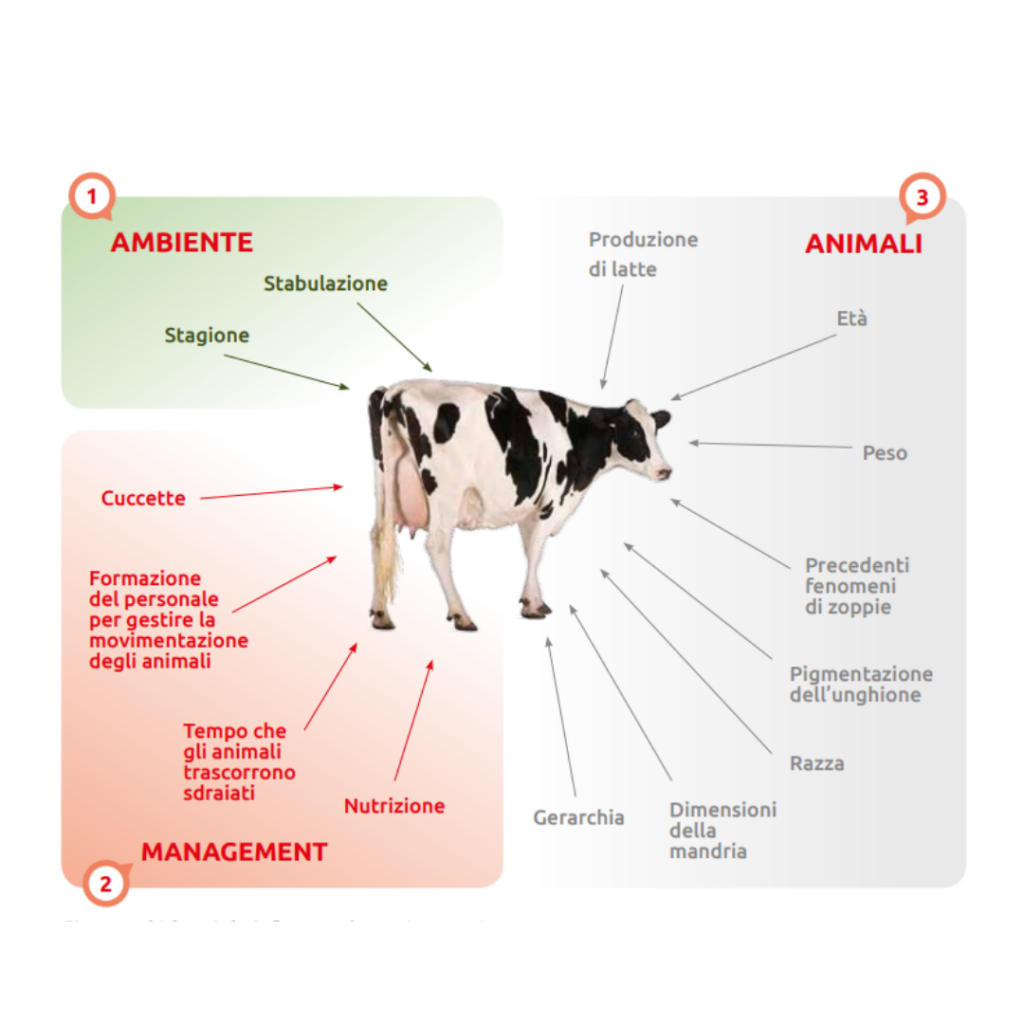
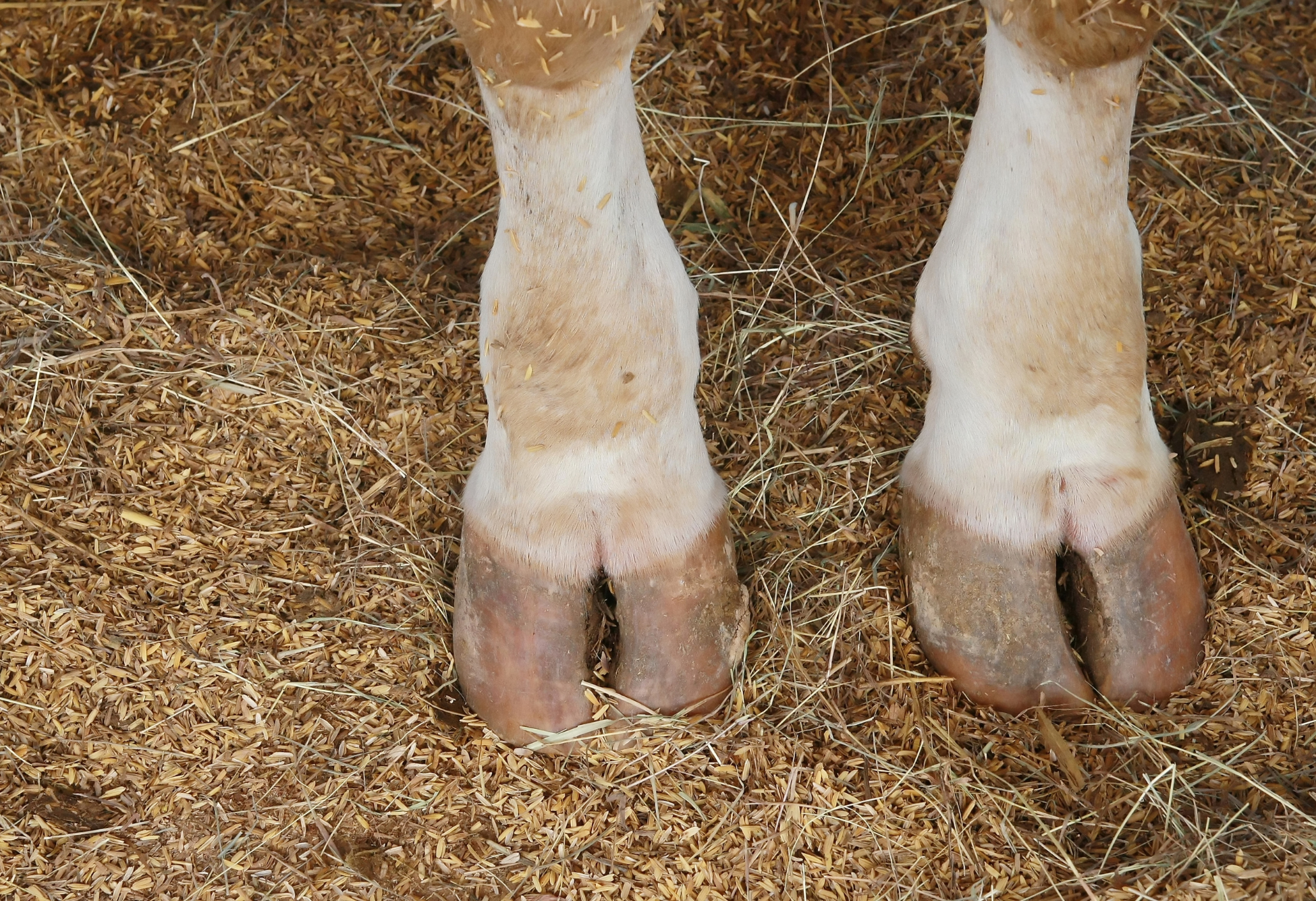
Hoof diseases in dairy cows involve the hind limbs in about 80% of cases, typically affecting the outer claws.
Only in 20% of cases are the forelimbs involved, and in this situation the problems are usually located in the inner claws.
The selection of dairy cows aimed at increasingly high production levels has made it possible to achieve excellent results from this point of view, but at the expense of an increasingly fragile and delicate locomotor system.
According to data collected on farms, hoof disease is the third leading cause (in some herds even the second) of involuntary culling.
Lameness is the sign of an animal trying to relieve pain in one limb by moving as little as possible, resulting in a reduction in feed intake and milk production, as well as poor appetite due to severe pain.
In addition, due to difficulty in movement, the same animal may show less evident heat signs, reducing reproductive performance and increasing the risk of developing other serious conditions such as fractures and arthritis, with a high risk of death or emergency culling.
When veterinary costs, increased workload, and losses due to non-marketable milk during treatments are also considered, it becomes clear how adherence to a proper hoof disease prevention protocol is essential for good herd management.
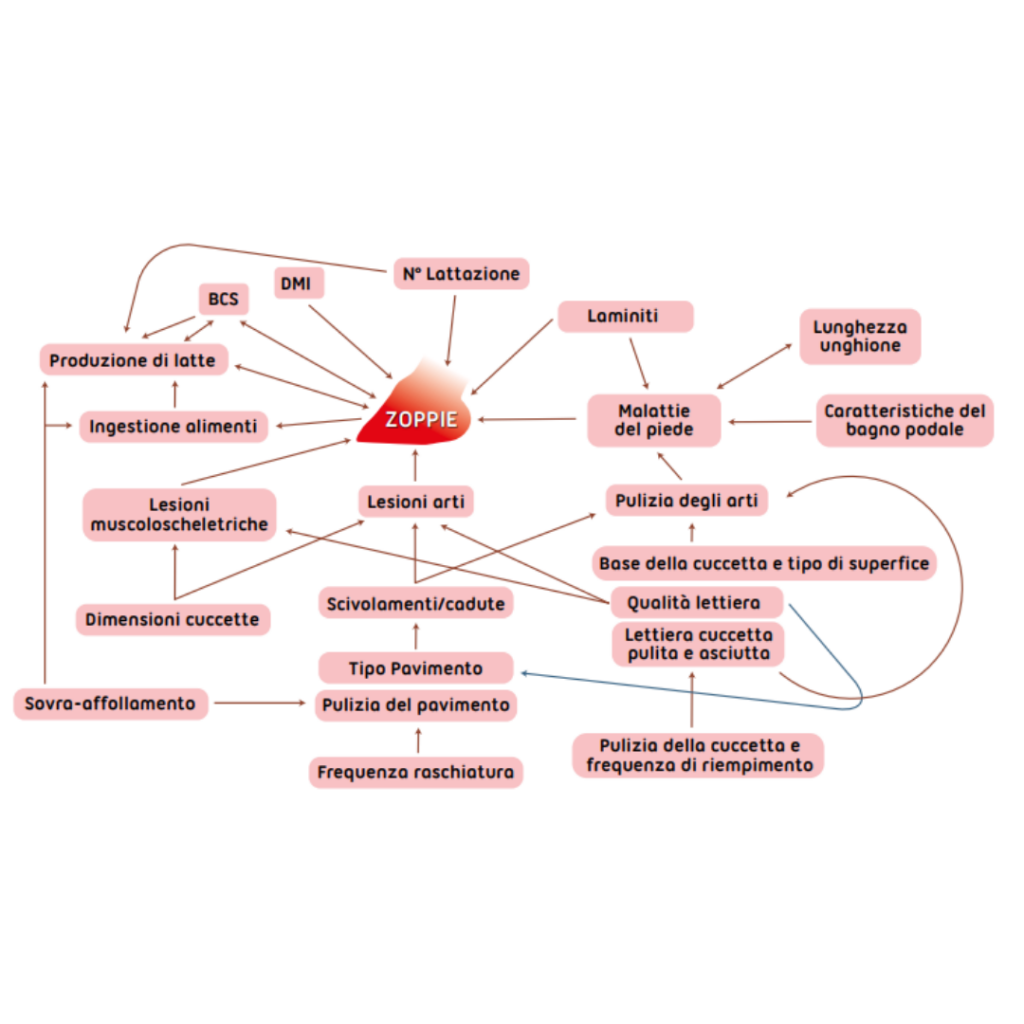
Lameness, 2 products recommended for you
Tecnozoo experts recommend two products to be used on your farm to enhance the prevention of any form of lameness.
ZINCOTRIS P
ZINCOTRIS P is a dietary mineral feed containing a source of zinc chelated with methionine, which improves its bioavailability and, together with iodine and biotin, helps to stabilize and/or improve the epithelia of the skin and skin appendages (hoof, udder).
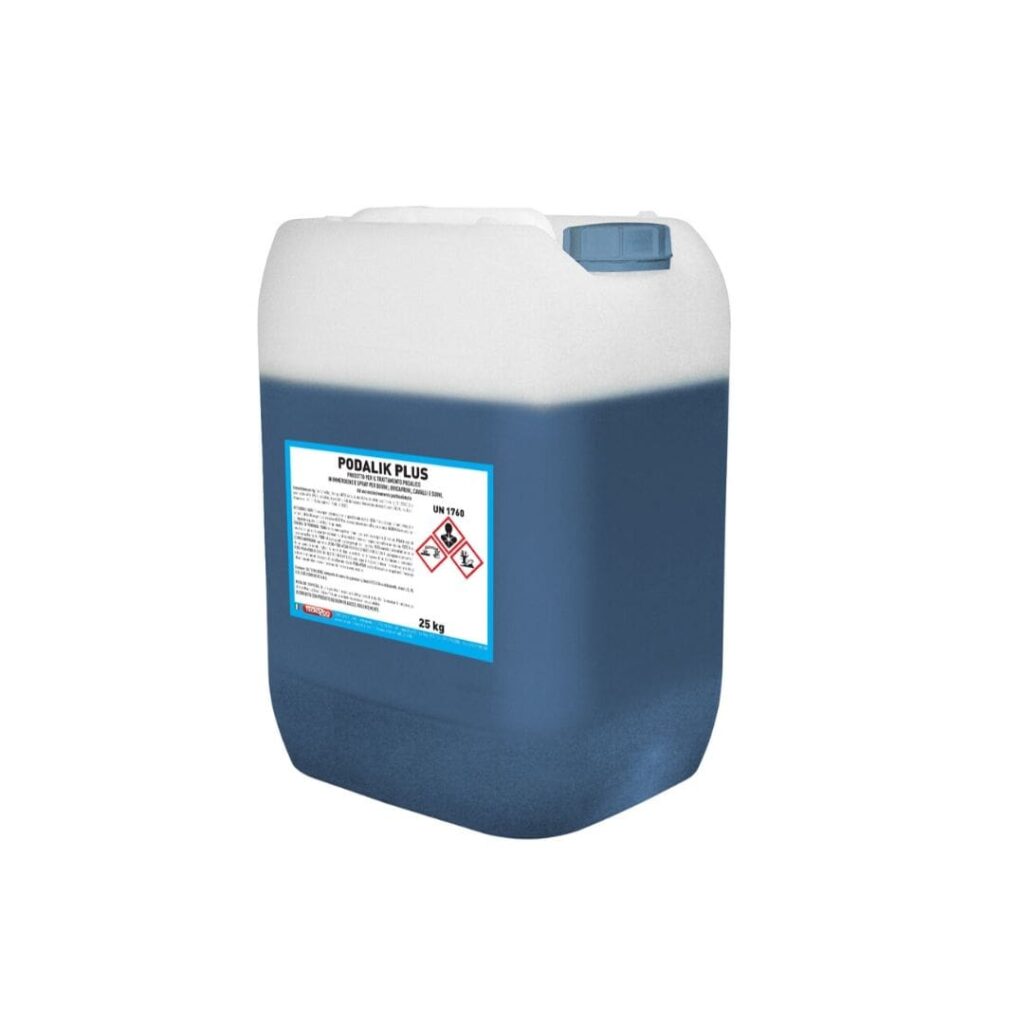
PODALIK PLUS
Podalik Plus helps with hoof hygiene and the prevention of all forms of lameness in animals through immersion of the limb extremities.
The presence of zinc and copper salts supports the natural strengthening of the hooves, while the other components, with their bacterial load control action, assist and promote hoof healing processes.
Special emphasis should be placed on the strong hygienizing activity of glutaraldehyde, combined with very low histolytic activity toward hoof tissues (both soft and hard), a feature that makes it preferable to the use of formalin. PODALIK PLUS can also be applied by spraying.
Discover all Tecnozoo products for hygiene and biosecurity on your farm.