Coccidiosis, Tecnozoo’s Advice

Coccidiosis, Tecnozoo’s Advice
Promote the development of a proper microbial flora to protect the mucosa from colonization by the most common intestinal pathogens, such as coccidia.
When discussing diseases that compromise intestinal health, it is impossible not to think of coccidiosis.
Coccidiosis is one of the most economically impactful diseases in the poultry sector.
Coccidiosis is a parasitic disease caused by protozoa belonging to the genus Eimeria.
In chickens, seven species are known (E. tenella, E. acervulina, E. mitis, E. brunetti, E. praecox, E. necatrix, and E. maxima), each characterized by different pathogenicity and intestinal localization.
The most common symptoms associated with coccidiosis are malabsorption, diarrhea, reduced productivity, and worsening of the feed conversion ratio.
Due to the development of drug resistance and the growing consumer demand for antibiotic-free production, the poultry sector faces a major challenge: finding effective alternatives to control this parasite.
THE USE OF ESSENTIAL OILS
The use of essential oils in animal nutrition to support intestinal health has proven to be one of the most important applications of these substances.
Essential oils are chemical mixtures with an extremely complex composition.
Each chemical species imparts an individual effect that contributes to a synergy of action and a final effect that depends on the nature and composition of the essential oil used.
The various properties attributed to essential oils are precisely linked to this synergistic action of the components, even though the mechanisms of action are not yet fully understood due to the complexity of their composition.
MECHANISM OF ACTION OF ESSENTIAL OILS
Essential oils appear to directly interfere with parasitic metabolism by disrupting biochemical processes through alterations in membrane permeability, or indirectly by immunomodulating the host’s response and supporting the host’s antioxidant systems.
The antioxidant power of the phenolic compounds contained in essential oils finds important application in counteracting oxidative damage caused by the response of stressed cells, such as parasitized cells.
When used correctly, some studies show that certain essential oils can modulate the intestinal bacterial flora and host defenses, supporting proper intestinal functionality.
Maintaining host defenses and the development of a proper microbial flora protects the mucosa from colonization by the most common intestinal pathogens, such as coccidia.
COXI STOP is a product based on essential oils, developed from Tecnozoo’s experience in using these components in animal nutrition to support the normal physiological balance of the intestine, especially during periods of stress that alter its functionality and predispose the animal to potential attacks by pathogens and parasites.

IMPROPER LITTER MANAGEMENT: THE MAIN FACTOR PREDISPOSING TO COCCIDIA DEVELOPMENT
Excessively wet litter predisposes to the development of environmental pathogens such as coccidia. The increase in environmental oocyst load is the basis of infestation; therefore, proper litter management is one of the main preventive measures.
Factors that lead to a higher incidence of “wet litter” include incorrect ventilation techniques and improper regulation of the drinking system.
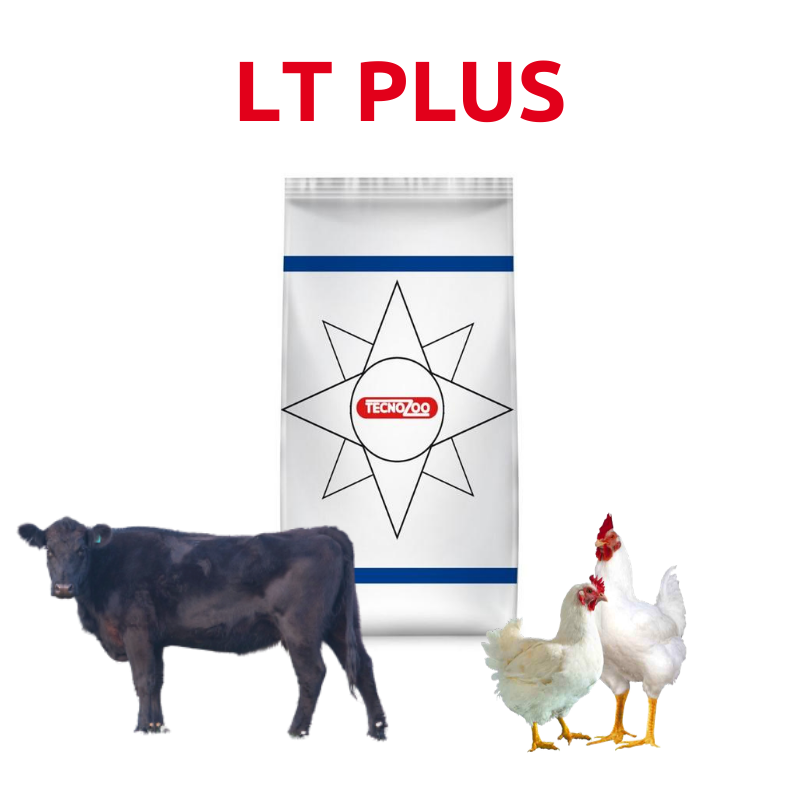
It is often difficult to reduce litter moisture, which is why Tecnozoo has developed LT PLUS, an environmental litter product that exploits the synergistic action of calcium salts to reduce moisture levels and create an environment hostile to the proliferation of coccidia and other pathogens.
 BIBLIOGRAPHY
- Adhikari et al., 2019 – “An approach to alternative strategies to control avian coccidiosis and necrotic enteritis”
- Michalina Adaszyńska-Skwirzyńska, Danuta Szczerbińska, 2016 – “Use of essential oils in broiler chicken production – a review”
- Article in World’s Poultry Science Journal · December 2016 “The potential of antioxidant rich essential oils against avian coccidiosis”
- D. Chapman, 2014 – “Milestones in avian coccidiosis research: A review”
- Eqbal M. A. Dauqan1*, Aminah Abdullah, 2017 – “Medicinal and Functional Values of Thyme (Thymus vulgaris L.) Herb”