Silage techniques and silo management: quality parameters, microbiological risks and solutions for forage preservation
Silage production is now one of the cornerstones of ruminant feeding on modern farms. Originally developed in the Nordic countries to ensure the availability of feed during the winter months, this preservation technique has become widely established thanks to its high operational efficiency and its ability to preserve the nutritional value of forage crops.
Adopting the right silage techniques offers undeniable strategic advantages:
- Minimising dry matter (DM) losses: whilst nutrient losses can reach or exceed 30% with traditional haymaking, in a well-managed and properly sealed silage, they are usually kept below 10%.
- Long-term nutritional stability: the food can be stored without losing its nutritional value for extended periods, allowing for consistent meal planning.
- Yield maximisation: this enables the optimal use of crops with high green matter production and the division of the land into two or three annual harvests.
- Operational efficiency: facilitates the mechanisation of Unifeed (TMR) mixing and distribution operations.
However, the success of silage production depends entirely on the proper management of anaerobic fermentation. Errors during harvesting, compaction or ensiling can compromise the palatability of the forage, reduce livestock performance and pose serious risks to animal health.
Sensory analysis of silage: how to identify abnormalities in the silo pit
Even before resorting to laboratory analyses, the farmer and the nutritionist can assess the condition of the silage by carrying out an organoleptic examination of the sensory parameters. Each olfactory and visual profile provides precise indications of the fermentation processes that have taken place inside the silo; in particular, the olfactory aspect, when assessed by an experienced professional, allows any anomalies to be identified immediately. Let’s look at these below:
Smell of vinegar (acetic acid)
A pronounced acetic odour indicates that lactic fermentation has not been dominant or efficient. Lactic acid is, in fact, the ideal fermentation product as it rapidly lowers the pH without
causing excessive losses of dry matter and is free from pungent odours. An excess of acetic acid indicates unbalanced heterofermentative fermentation.
A rancid or fishy smell (butyric acid)
The presence of butyric acid is often an indication of Clostridium contamination. This phenomenon frequently occurs when silage is too wet (moisture content above 70 per cent) or due to soil ingress during mowing and chopping (e.g. excessively low cutting heights or contamination from slurry). The silage is often viscous and sticky, characterised by high protein degradation, low energy value and a marked reduction in palatability.
Smell of ammonia
An ammonia-like odour indicates excessive decomposition and breakdown of proteins into ammonia and amines. This is caused either by a failure of the pH to drop or by advanced clostridial activity.
A sweet, alcoholic smell (ethanol)
The perception of a sweet or fruity aroma is linked to the high concentration of ethanol produced by the action of yeasts on soluble sugars. This process results in significant losses of dry matter and predisposes the mass to aerobic heating when the trench front is opened.
Smell of caramel or tobacco
This refers to forage that has suffered prolonged heat damage during storage, which is typical of silage batches with an excessively high dry matter content (forage that is too dry). In this context, the Maillard reaction is triggered, whereby proteins bind with sugars, rendering them indigestible for the animal (increase in insoluble nitrogen, ADF-N).
Microbiological and toxicological hazards in defective silage
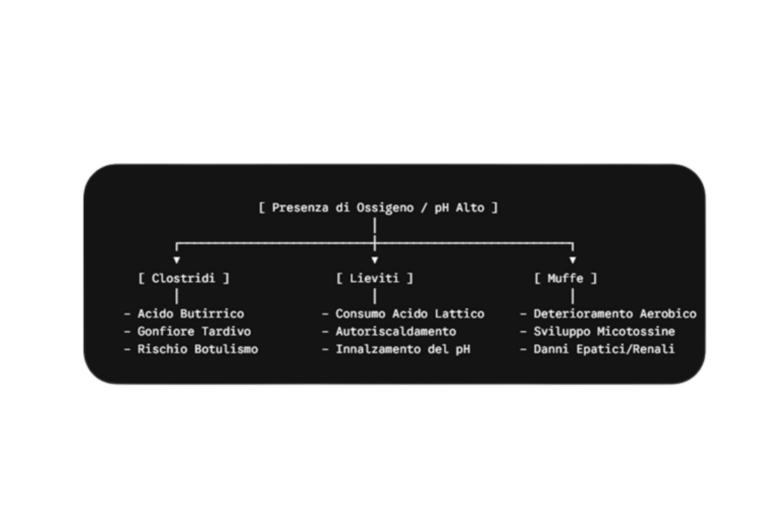
When the acidification process is slow or incomplete and oxygen inadvertently enters the mass, this creates the ideal microenvironment for the development of pathogens and toxins.
1. Clostridia and ‘late bloating’ in cheeses
Anaerobic bacteria of the genus Clostridium (including C. tyrobutyricum, C. butyricum and C. sporogenes) ferment carbohydrates and proteins. C. tyrobutyricum is capable of converting lactic acid into butyric acid, hydrogen and carbon dioxide, thereby raising the pH of the curd.
Clostridial spores pass through the dairy cow’s digestive system and enter the milk via faecal contamination during milking. The presence of these spores in the milk causes serious structural defects in hard and semi-hard cheeses (Grana Padano, Parmigiano Reggiano, Emmental), known as late bloating.
In extreme cases, contamination of the chopped mass with animal carcasses promotes the growth of Clostridium botulinum, the causative agent of botulism in cattle.
2. Biogenic amines and metabolic disorders
Proteolysis carried out by Clostridium flora leads to the formation of biogenic amines such as putrescine, cadaverine, tyramine and histamine. As well as reducing the amount of feed ingested, excess histamine in the bloodstream, for example, causes alterations in vascular permeability and blood stasis in the keratogenic zone, acting as a predisposing factor for painful symptoms and lesions in the bovine foot (lameness).
3. Enteric bacteria and silo-filling disease
Enterobacteria such as Escherichia coli, Hafnia alvei and Serratia fonticola compete with lactic acid bacteria during the initial stages of ensiling. Their ability to reduce nitrates to nitrites and subsequently to gaseous nitrogen oxides (NO₂, N₂O₄) results in the release of yellow-brown gas from the silo. Inhalation of these fumes by operators causes severe irritation to lung tissue, a condition known as ‘silo-filling disease’.
4. Moulds and mycotoxins
Developing mainly on the plant or, in some cases, on the side of the silage pit exposed to the air, moulds (Fusarium, Aspergillus, Penicillium, etc.) degrade the nutritional value of the silage and produce toxic secondary metabolites. The most common are:
- Aflatoxins (AFLA B1): these have hepatotoxic and immunosuppressive effects; their presence in feed leads to the excretion of aflatoxin M1 in milk, which is subject to statutory limits.
- Deoxynivalenol (DON or vomitoxin) and zearalenone (ZEN): produced by species belonging to the genus Fusarium, they cause a reduction in feed intake, immunosuppression, reproductive disorders (hyper-oestrogenism, irregular cycles, abortions) and a decline in milk production.
- Fumonisins: reduced feed intake, liver damage, a general decline in performance and a reduction in the animal’s immune function.
The use of additives for silage stabilisation: AGECON 2
To reduce the risks associated with abnormal fermentation and prevent aerobic decay at the head of the trench, it is essential to combine good agronomic practices (proper curing, rapid compaction, airtight sealing) with the use of specific chemical or biological preservative additives.
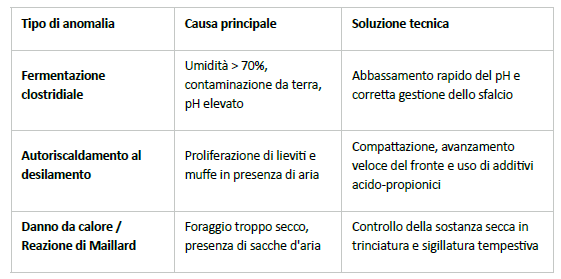
In this context, AGECON 2 offers a solution to ensure the protection and stabilisation of the forage crop.
Technical specifications of AGECON 2
To ensure effective protection of the forage during all stages of silage production, Tecnozoo offers AGECON 2, a liquid preservative premix developed specifically for the treatment of silage intended for cattle, sheep, goats and pigs. This solution works through the presence of ammonium propionate, an active ingredient which, once distributed and mixed evenly throughout the forage, gradually releases propionic acid.
The targeted action of propionic acid acts directly on the critical points of the preservation process, acidifying the forage uniformly and effectively inhibiting the growth of yeasts and moulds. This preventative measure prevents the onset of undesirable secondary fermentation, helping to stabilise the silage temperature and avoiding the self-heating phenomena that commonly occur during silage removal or when the front of the silage pit is exposed to the air.
Keeping the silage cool and microbiologically stable means preserving the integrity of the nutrients, limiting the loss of dry matter and safeguarding the palatability of the forage, thereby ensuring high intake by the animals in the barn.
Achieving silage of high nutritional and hygienic quality requires attention at every stage of the production chain: from the choice of harvest time, to the management of the harvesting site, right through to the strategic use of preservatives
Would you like to find out more?
Get in touch with our specialist Tecnozoo technicians or drop us a line!