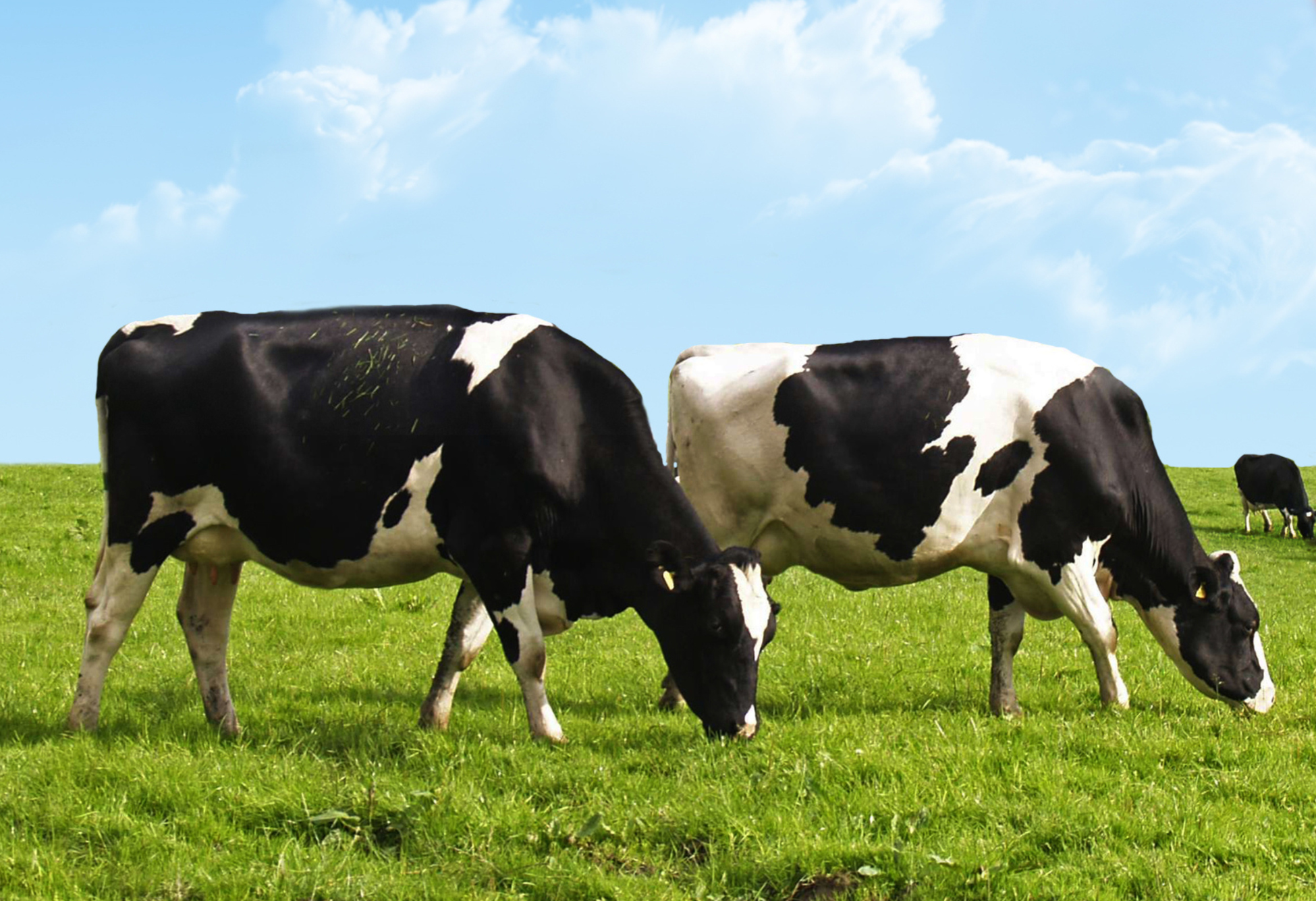
Why do lameness issues in dairy cows show a higher incidence after the end of summer?
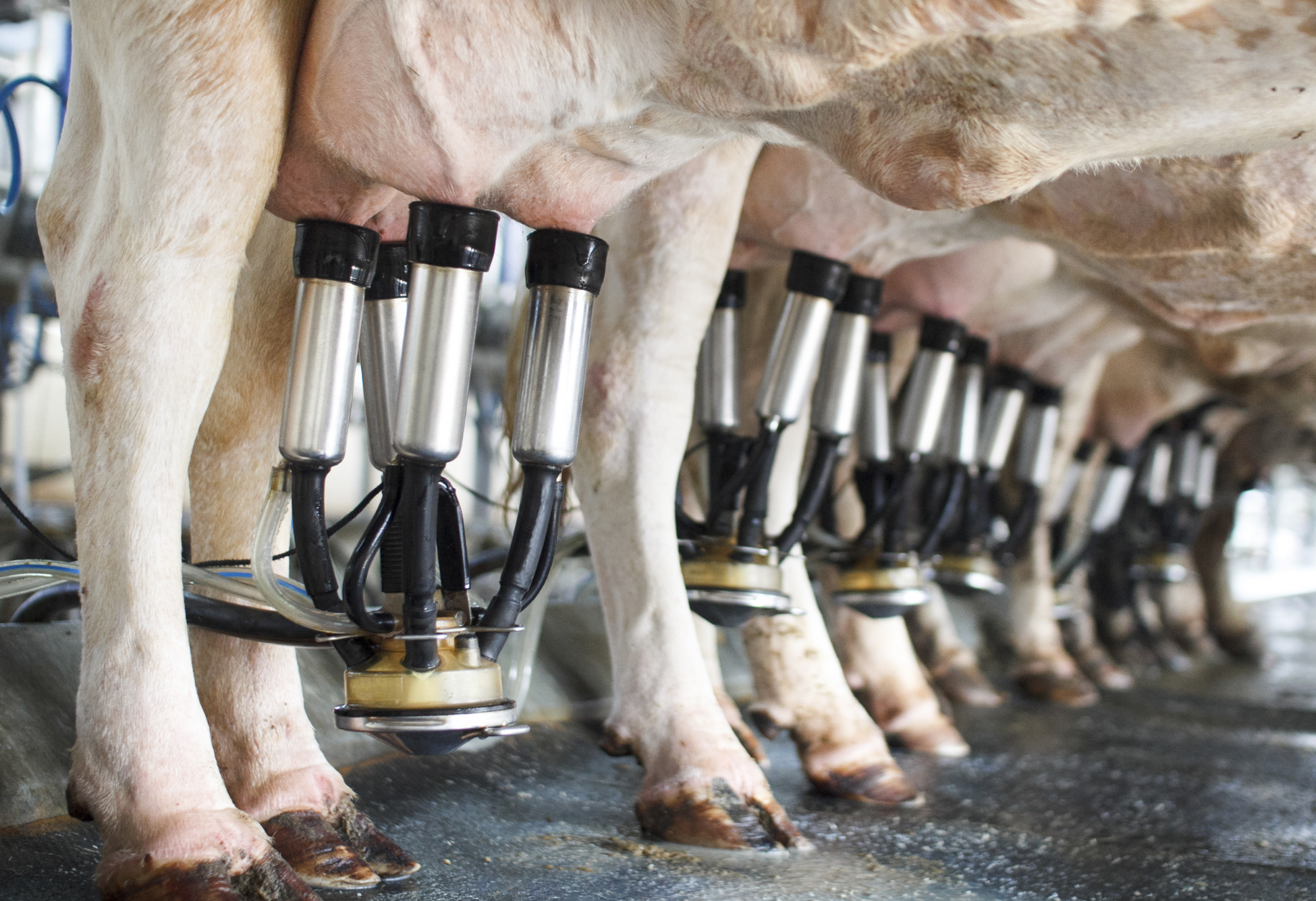
In this third article dedicated to syndromes typically observed in autumn on farms, we will address hoof-related problems.
Hoof diseases, such as lameness, can be caused by various factors, including laminitis, which represents the final manifestation of several conditions that may have different origins, such as inadequate barn management (slippery flooring surfaces and lack of space) and nutritional imbalances, with unsuitable rations and a low supply of trace elements that are important for hoof condition, such as zinc and biotin.
In particular, between late summer and early autumn, many dairy farms observe a peak in the incidence of lameness, or more precisely laminitis, mainly due to poor management of summer-related issues.
Lameness caused by heat stress is due to the following problems:
Chemical
To cool animals, water sprays are used, which consequently create humid environments that are not suitable for maintaining a healthy hoof.
Metabolic
The animal experiences hyperventilation, consequently losing CO2 and reducing the buffering capacity of the rumen, increasing the risk of acidosis.
Mechanical
The animal spends much more time standing, because when lying down it dissipates less heat.
By combining these three factors, the hoof is subjected to strong stress, which increases the incidence of lameness (in the United States, in September on average 16% of cows are lame, i.e. with a locomotion scoring index greater than or equal to 3).
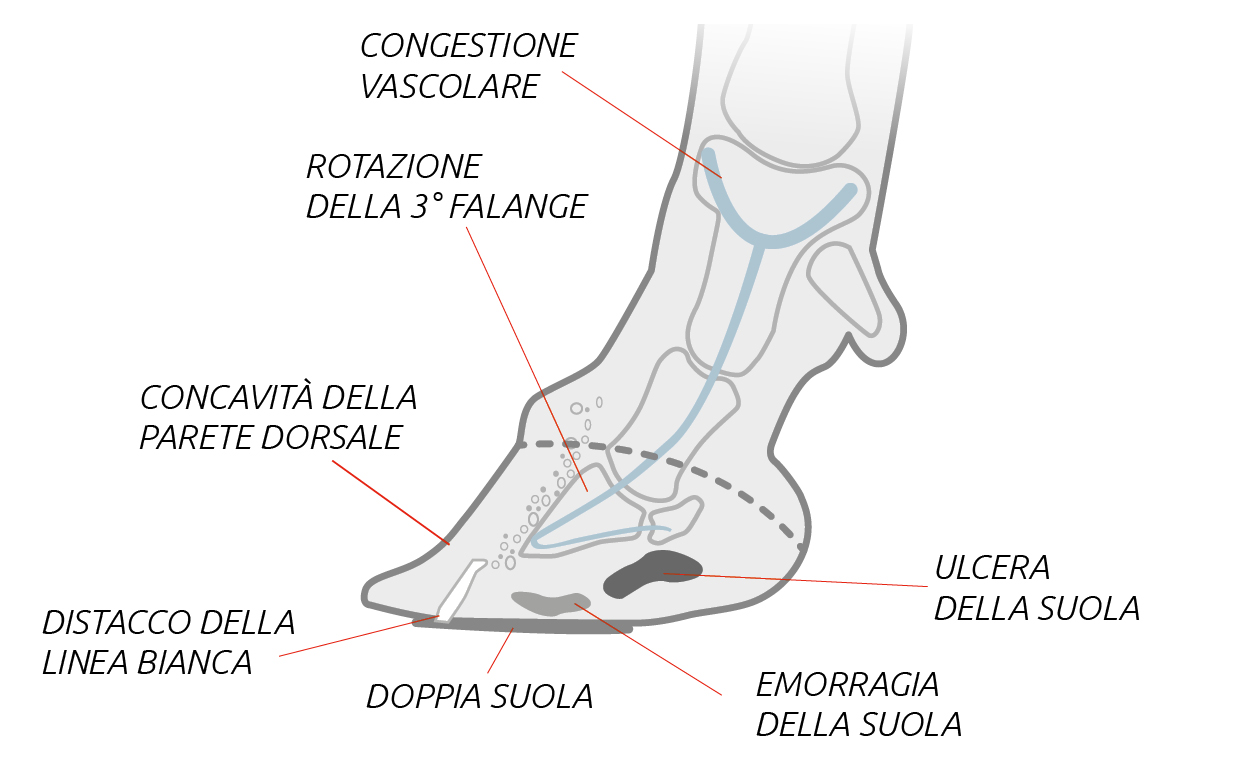
From a nutritional point of view, certain trace elements and vitamins such as Zinc and Biotin can support bovine hoof condition. Similarly, to promote regeneration and hardening of the claw horn, it is useful to carry out repeated footbaths with products based on copper and zinc sulfate (2–3 times per week, preferably on consecutive days).
Zinc (Zn)
Very important as it is part of the composition of 300 enzymes. It improves wound healing, keratin synthesis, epithelial protection, and claw hardness. Recommended levels range between 50–60 ppm, one third of which should be in organic chelated form or as sulfate.
Study on organic Zinc
In the United States, a study was conducted on 3,000 cows on the use of zinc in organic form, demonstrating a positive effect on hoof condition, reducing:
• white line disorders by 30%
• sole ulcers by 11%
• digital dermatitis by 33%
THEREFORE, USING ORGANIC ZINC IMPROVES THE ANIMAL’S HEALING CAPACITY AND CLAW HARDNESS.
Biotin (vit. B8)
Improves claw condition:
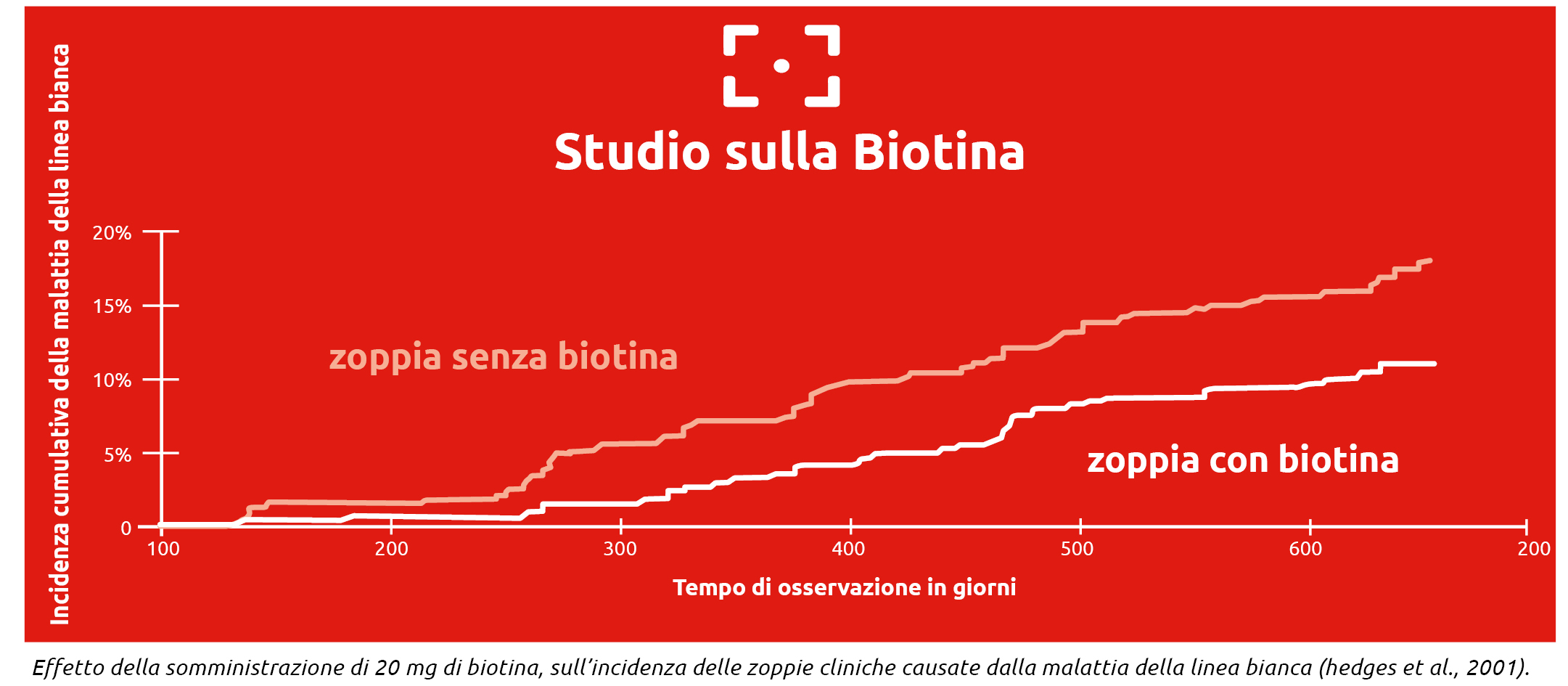
• moderates white line separation (Midla et al., 1998 – Hedges et al., 2001);
• limits claw lesions (Campbell et al., 1996);
• reduces sole ulcers (Hegemeister, 1996 – Leisher et al., 1996 – Koller et al., 1998);
It also increases milk production.
Inclusion levels range from 10–20 milligrams/head/day for 6 months to 1 year.
How much would biotin cost you?
4–10 cents/head/day
Is it worth using?
Yes, the benefit is four times greater than the cost.