Heat stress in poultry
QUESTIONS, ANSWERS AND ADVICE ON HEAT STRESS
Heat stress occurs whenever the animal is exposed to a temperature above its “thermoneutral zone”
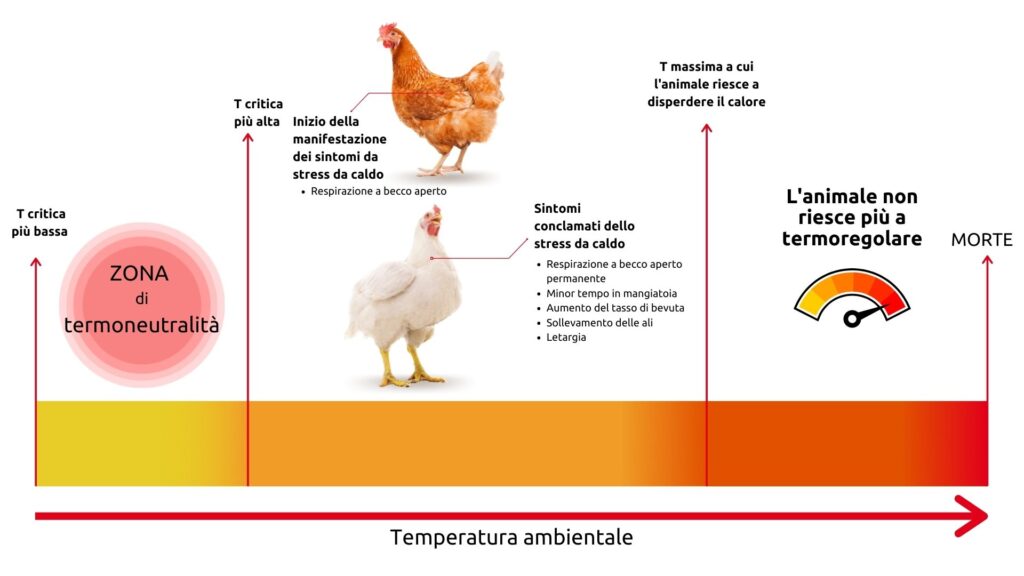
We can define the thermoneutral zone as the temperature range within which the animal does not show the characteristic symptoms of heat stress because it is still able to maintain a constant body temperature while exhibiting normal behavior.
The thermoneutral zone for laying hens ranges between 19 and 22°C, while for broiler chickens it ranges between 18 and 22°C.
What are the symptoms of heat stress?
In general, poultry show similar behaviors in cases of heat stress, with individual variations in intensity and duration of the response.
Animals affected by heat stress:
- Spend less time feeding
- Increase water intake
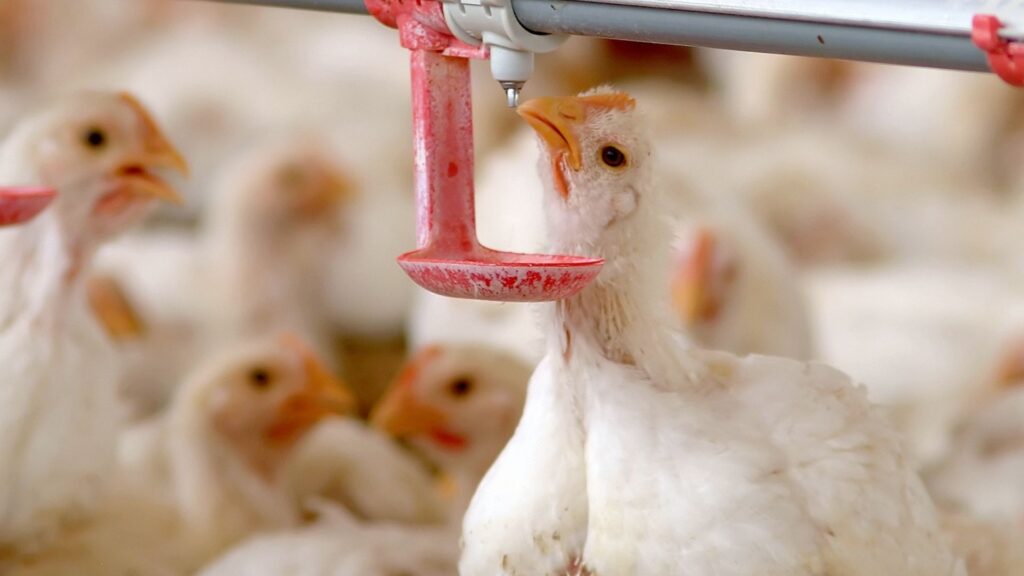
- Breathe with their “beaks open”
- Lift their wings
- Are more lethargic

Why do they show these symptoms?
The high metabolic activity of the animal for growth or egg production results in high heat production.
This heat production depends on several factors, including: breed, body weight, level of production, feed intake, type of feed, and physical activity.
Dissipating this heat in poultry is not simple because, unlike mammals, they do not have sweat glands.
When external temperatures exceed the animal’s thermoneutral zone, the mechanisms used for heat dissipation become progressively less effective, and the consequences can be harmful.
How do poultry dissipate heat?
Heat dissipation in poultry species can occur through five main mechanisms:
- Conduction:
Heat loss occurs through contact between the animal and a surface such as litter or a wall.
- Convection:
Convection involves heat dissipation in a similar way to conduction, but through a moving medium such as forced airflow.
This is the most efficient way to dissipate heat, provided that the airflow over the animal is fast enough to remove the layer of air surrounding the animal where conduction occurs.
To promote this method of heat dissipation, modern farming technologies include the use of forced ventilation, often combined with air cooled by systems such as cooling systems.
- Radiation:
Involves the emission of heat into the surrounding environment through electromagnetic waves.
This type of heat dissipation does not require a medium such as air in order to occur.
To optimize this process, the animal often slightly opens its wings to promote greater heat exchange with the air and surrounding elements.
- Evaporation:
Evaporation is extremely important because poultry lack sweat glands. Evaporation occurs through the skin or through open-beak breathing. In particular, the nasal cavities are the most efficient means of completing evaporation, which is why open-beak breathing is one of the first symptoms of heat stress. However, evaporation is effective only when humidity is not excessively high, which is why a hot and humid environment is much more stressful than a hot and dry one.
- Excretion:
Another way to dissipate heat is through an increased rate of fluid excretion via urine and liquid feces.
What are the effects of heat stress?
The effects of heat stress depend on the duration and frequency of the animal’s exposure to the stressor.
Exposure to high temperatures can be acute and sudden, or chronic, as during summer cycles when the animal is exposed to temperatures well above the thermoneutral zone for prolonged periods.
Chronic exposure does not exclude acute exposure and vice versa; however, while acute exposure is often associated with increased mortality due to suffocation, chronic exposure is associated with a decline in performance due to the effects of oxidative stress experienced by the animal.
What are the effects of oxidative stress and how do they occur?
One of the responses to heat stress, as seen, is the attempt to dissipate heat through exchange with the surrounding environment.
To achieve this, the animal’s physiological response is to increase peripheral blood flow through dilation of blood vessels in superficial tissues such as the skin, at the expense of visceral tissues, thus reducing blood flow t1o internal organs such as the intestine.
The resulting hypoxic state generates a quantity of reactive oxygen species (ROS), commonly referred to as free radicals, that exceeds the animal’s capacity for elimination.
This leads to what is technically referred to as a state of oxidative stress, whose direct consequence is cellular damage, loss of structural integrity of the intestine, a local inflammatory response, and alteration of immune function.
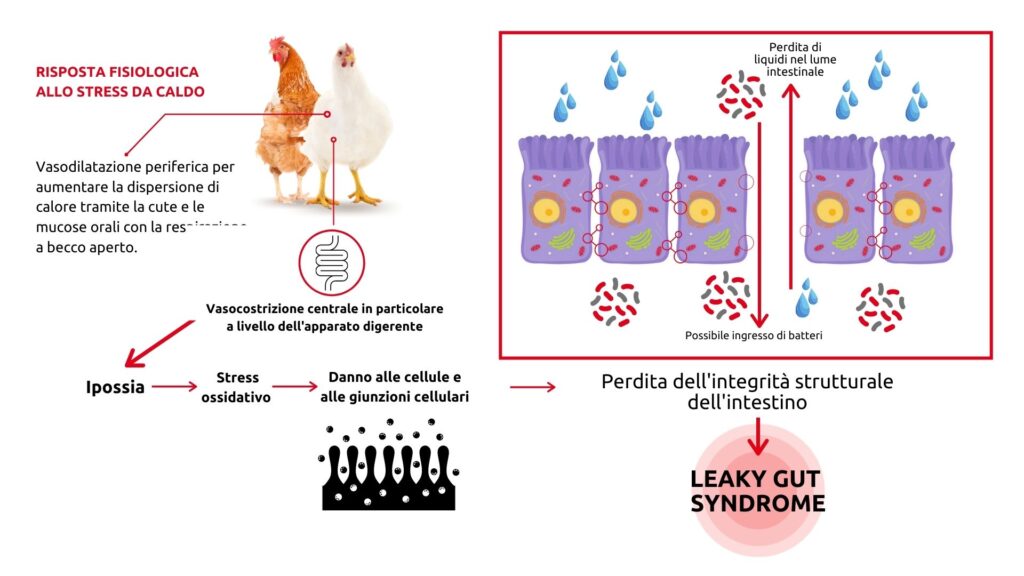
Along with alteration of the intestinal barrier, negative changes in the intestinal microbiota also occur (the population of microorganisms inhabiting the intestine, which is essential for maintaining certain intestinal functions).
The combination of these alterations creates a condition known as “leaky gut syndrome.”
This syndrome is described as an alteration of the structural integrity of the intestine and, as a direct consequence, causes excessive fluid loss, which inevitably results in poor feed assimilation, loss of feed efficiency, conversion efficiency, and overall performance.
Is it possible to counteract oxidative stress damage?
The main tool available to the farmer is to prevent oxidative stress from occurring by avoiding heat stress.
Below are some recommendations for farmers that may help reduce endogenous heat production in the animal and promote heat dissipation.
- Avoid ad libitum feeding and provide good-quality feed only during the cooler hours
- Ration the feed, i.e., calculate the amount of feed required by the animal to maintain physiological functions and performance without exceeding the amounts per head per day
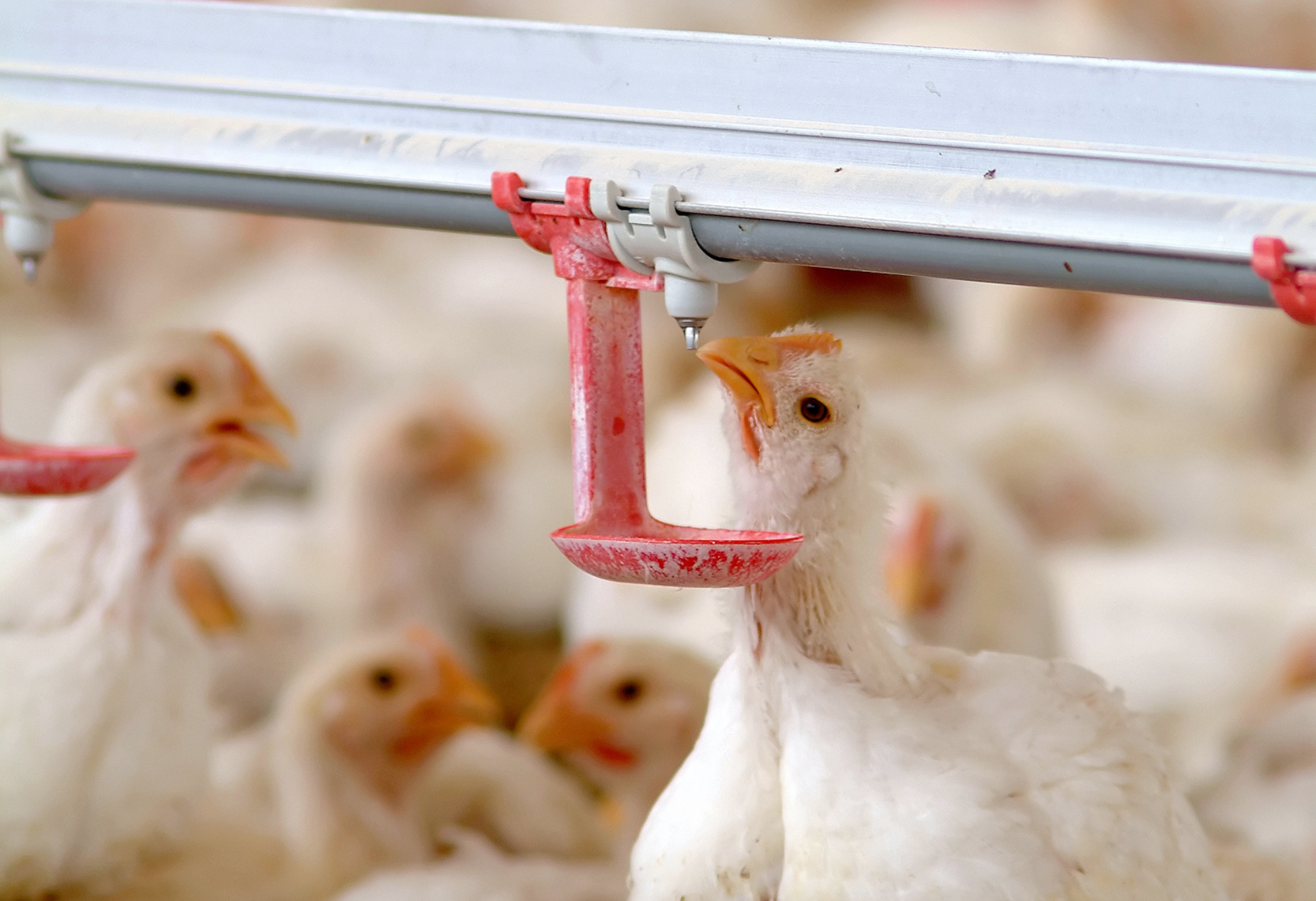
- Always provide fresh, clean water, as warmed water creates conditions that favor bacterial proliferation.
- In intensive farming systems, adjust ventilation based on heat stress symptoms and, if necessary, use cooling systems such as cooling systems or fogging systems.
- In outdoor systems, create shaded areas if natural tree cover is not available.
From a nutritional standpoint, farmers can intervene by supplementing drinking water with mineral salts and electrolytes that are lost during the onset of leaky gut syndrome.
Another possible intervention is to supplement the diet with antioxidant substances from plants and derivatives, as well as vitamin C, which work synergistically to counteract the negative effects of free radicals produced during oxidative stress, which we have seen to be a direct consequence of heat stress.
In this regard, Tecnozoo recommends NORMOTERM FLUID, which, thanks to its content of natural antioxidant substances, helps counteract alterations in oxidative balance, maintaining the animal’s physiological equilibrium, especially in stressful situations.
Did you like the article?
Would you like to stay up to date on all the nutritional solutions Tecnozoo has to offer?