Bovine hoof disorders
Bovine hoof disorders:
environment, genetics, management… and more
Which cows are most at risk for bovine hoof disorders?
Starting from the analysis of data collected on farm by the hoof trimmer, at herd level the most critical moment is always a few months after the hottest and most humid periods of the year; if we instead consider the individual animal, very often the origin of the hoof problem can be traced back to the time of calving.
By investigating the causes underlying hoof disorders, it emerges that they depend on a series of concurrent causes and predisposing factors that result in an altered balance between horn production and wear, alterations in peripheral circulation, or an increased risk of hoof trauma.
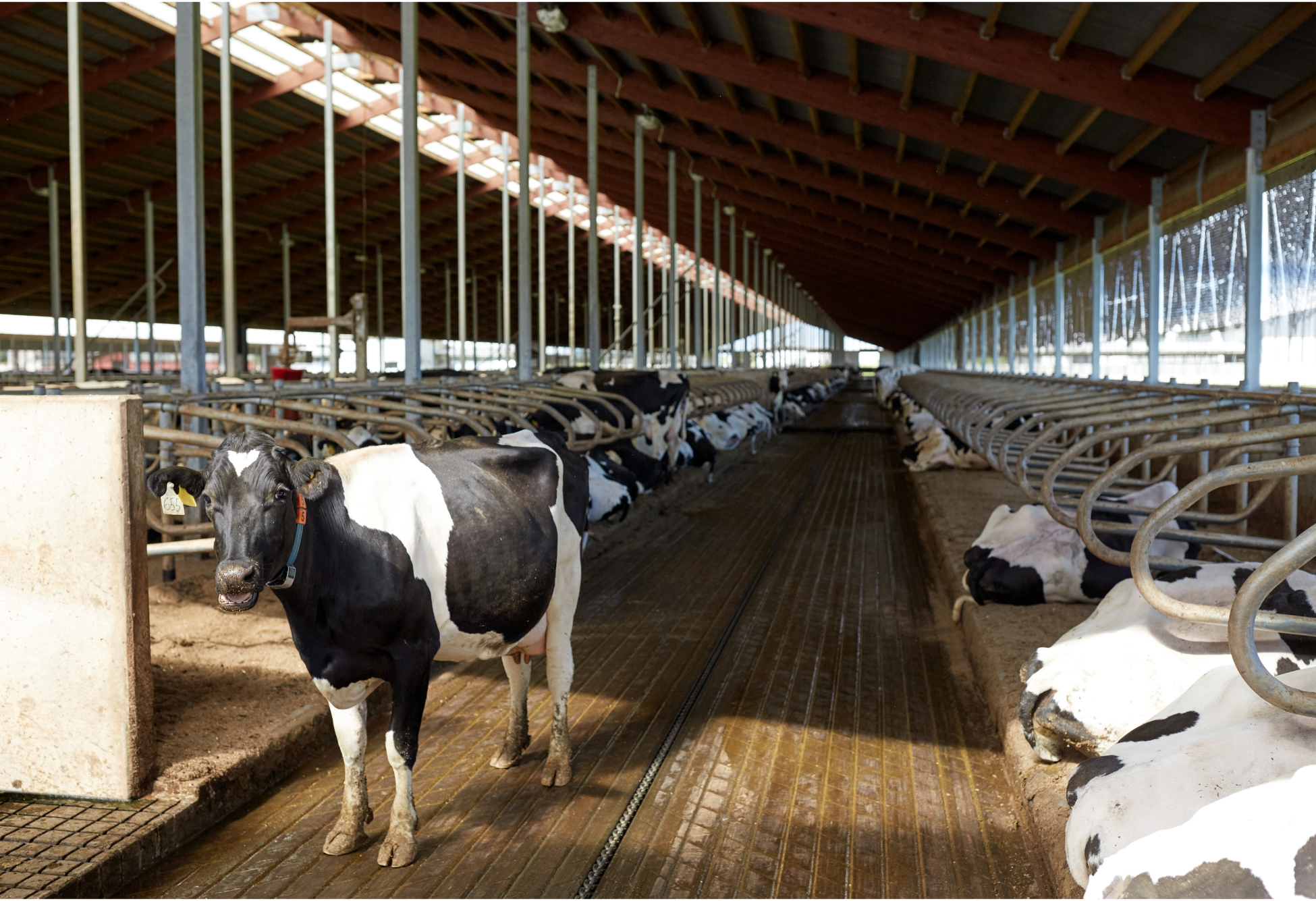
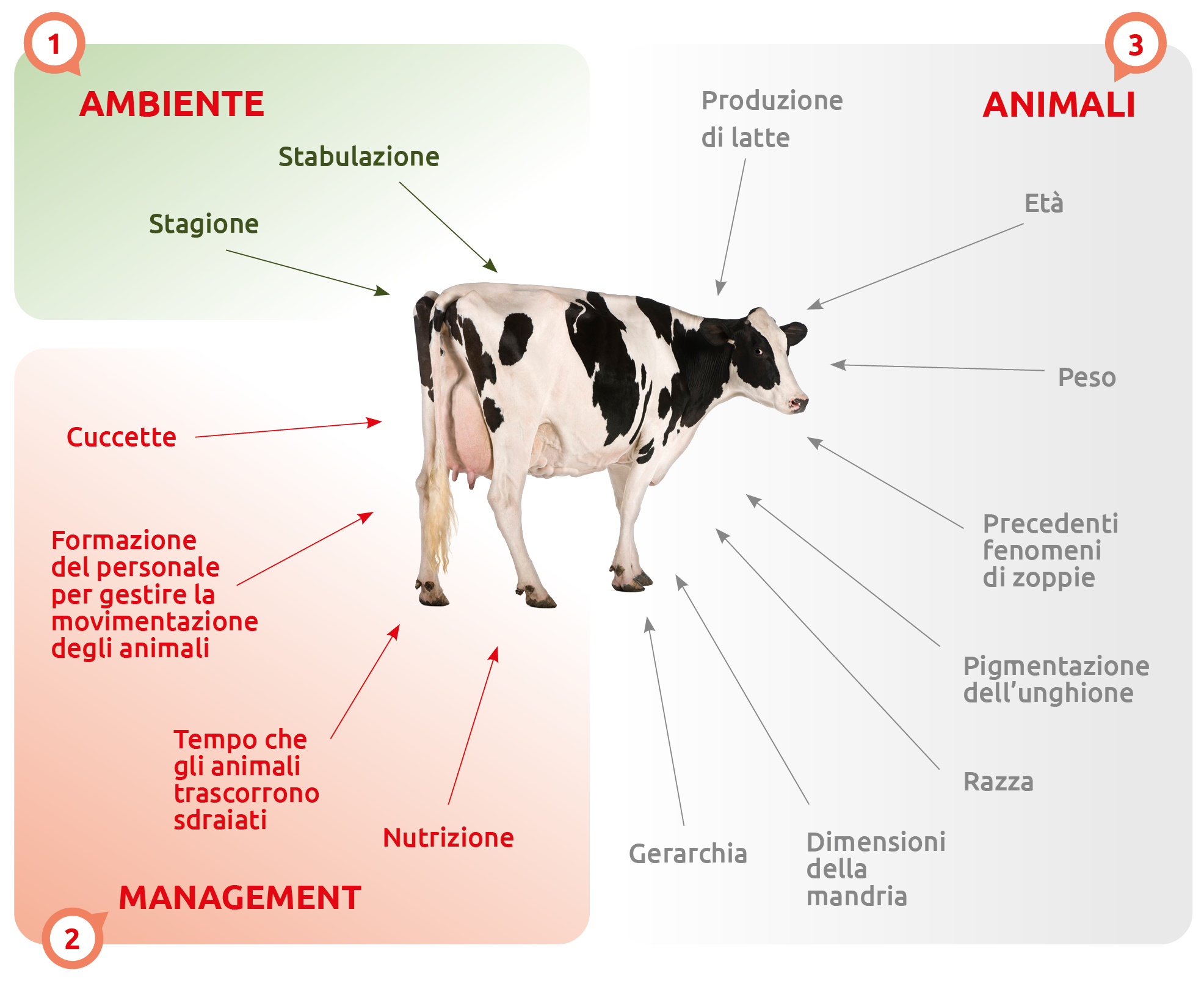
These predisposing factors can essentially be grouped into factors related to the environment (climate and season), the housing system (type of flooring and bedding, cleaning systems, space available for animal movement and resting), management (staff involved and approach to animal handling, level of environmental hygiene achieved, overcrowding, preventive measures implemented, nutrition), and factors intrinsic to the animal (age, stage of production, body weight, previous diseases, breed, hoof pigmentation, hierarchical position).
Remember… when considering bovine hoof disorders, it is important to keep in mind that in 80% of cases they affect the hind limbs, and tend to involve the outer claws. Only in 20% of cases are the forelimbs involved, and in this case the problems are usually located at the level of the inner claws.
Download the complete magazine to further explore the following topics on bovine hoof disorders:
MYCOTOXINS AND HOOF DISEASES: paying attention to feed hygiene
HOOF ANATOMY: a few centimeters supporting many hundreds of kilograms of weight!
INFECTIOUS DISEASES OF THE BOVINE HOOF: a brief overview
Discover all products for dairy cows.
To stay up to date with all our news, follow our Instagram and Facebook profiles.