Biosafety in Farming: Cleaning and Disinfection
Biosafety in Farming
In recent years, increasing attention has been paid to biosafety in farming.
Biosafety encompasses all measures adopted to maintain or improve the hygienic and sanitary conditions of a farm. Its aim is to prevent the introduction of new diseases and control the circulation of existing ones through a combination of structural interventions, organizational procedures, and behavioral practices closely related to the type of facility.
Cleaning and Disinfection
Among the most important organizational procedures in farm biosafety, cleaning and disinfection play a key role.
Cleaning and disinfection are closely linked. Most sanitizing or disinfectant products are inactivated or rendered less effective when in contact with organic matter, making dirt removal an essential and indispensable practice for proper farm sanitation.
In this article, we will focus on the cleaning phase, exploring detergents, their composition, and how they work.
Biosafety in Farming: Cleaning Procedures
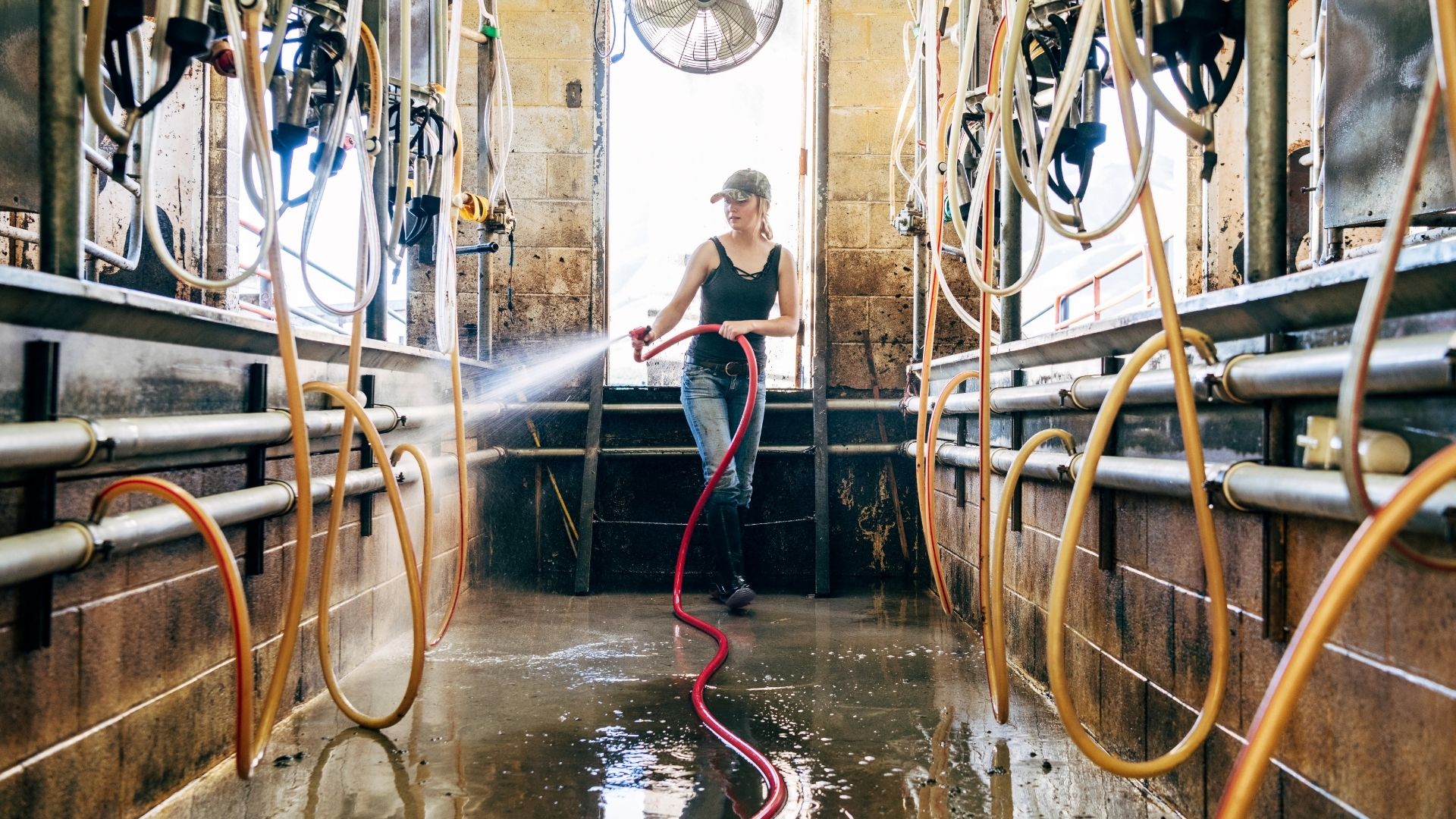
Cleaning refers to the removal of organic residues from environmental surfaces and farming equipment.
Cleaning procedures combine mechanical methods (e.g., high-pressure water) with chemical agents such as detergents, which reduce the mechanical energy needed to remove dirt, optimizing results.
Detergents generally contain surfactants, molecules that significantly reduce surface tension in a solution, enhancing its wetting power.
The wetting power of a solution is its ability to interact with non-miscible substances, promoting cleaning and emulsification processes.
During emulsification, surfactant molecules, which have both a water-soluble (hydrophilic) and water-insoluble (hydrophobic) part, orient themselves to disperse non-miscible substances into tiny particles.
In the cleaning process, organic matter is detached similarly, but the key difference lies in the strong ability of the surfactant’s hydrophilic group to detach dirt from a substrate.
This property is typical of charged surfactants, especially negatively charged ones.
Surfactants are classified into three types based on their charge:
- Anionic surfactants
Negatively charged, highly foaming, and excellent emulsifying capacity. - Cationic surfactants
Positively charged, highly foaming. - Non-ionic surfactants
Low foaming but good cleaning power.
In addition to surfactants, detergents often contain complementary substances such as pH stabilizers, water hardness reducers, and oxidizing agents like hypochlorites and chlorites that help degrade dirt.
Biosafety in Farming: Tecnozoo Solutions
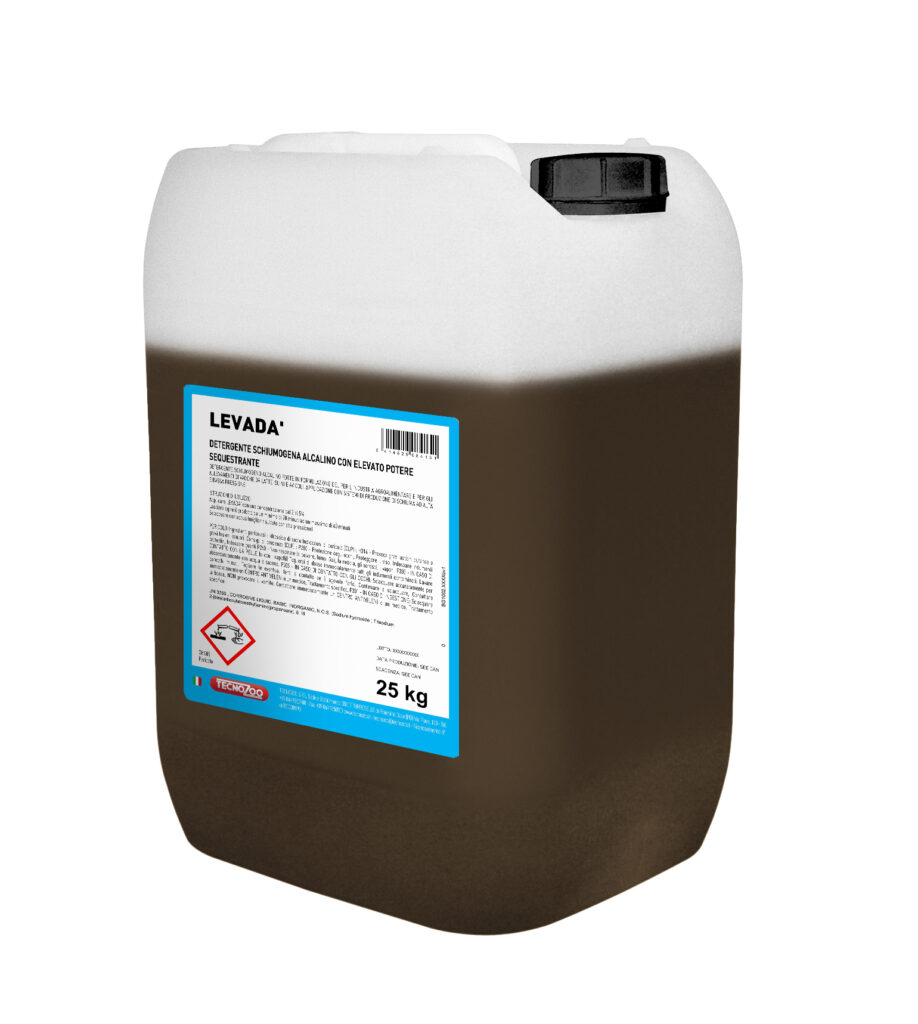
Tecnozoo’s hygiene and biosafety line includes a wide range of detergents and sanitizers. Among the most suitable detergents for farming is LEVADA, a strong alkaline gel detergent ideal for your farm.
Its formulation contains sodium hydroxide and anionic surfactants with high foaming and cleaning power, effectively removing dirt, grease, and manure even from hard-to-clean areas.
It can be applied using high- or low-pressure foam systems.
Discover more about Tecnozoo’s hygiene and biosafety products for farming.